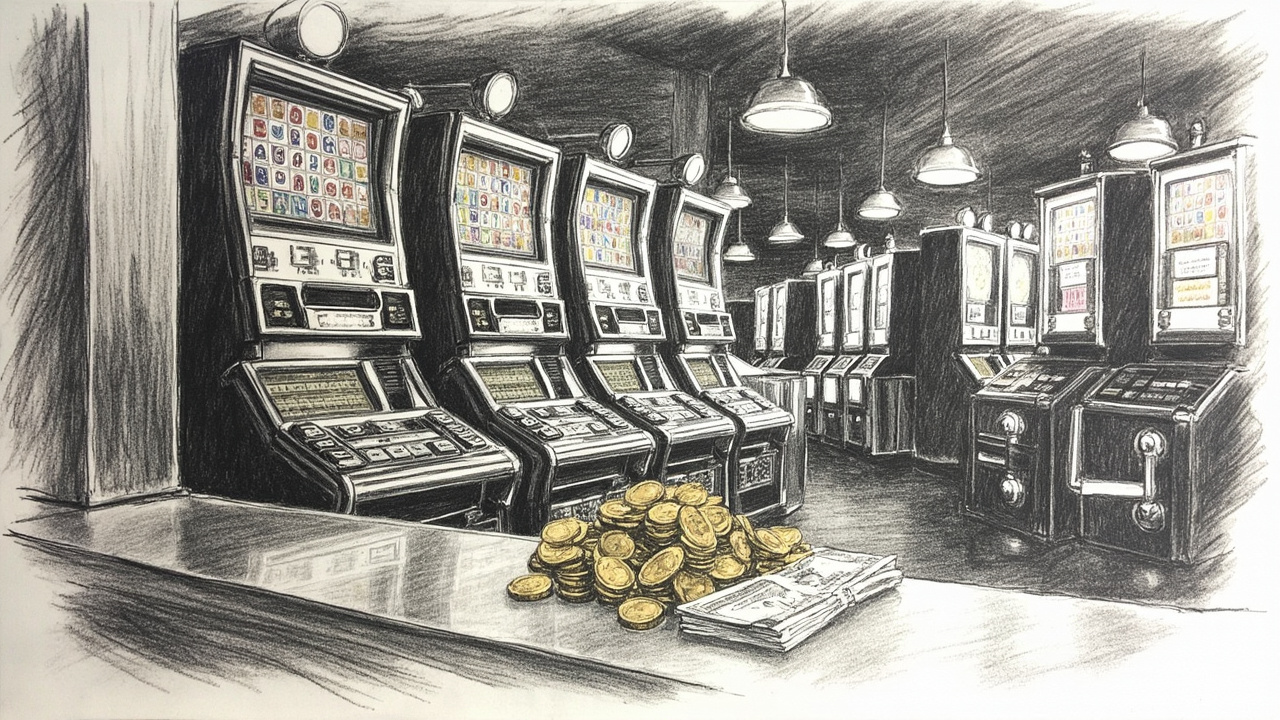
The clock on the wall of the Darwin hotel read 2.14 am when the last coin dropped into the tray. A man in a faded Akubra stared at the screen, fingers hovering over the max bet button. He had promised himself an hour and forty minutes had already slipped past. The air conditioner rattled like a fridge in a hot shed, pushing cold air over shoulders that had gone stiff from sitting still. He knew the drill from trading days gone by: set a stop, stick to it, walk away before the market turns. Yet the glowing screen pulled harder than a tide at low water.
Pokies machines do not care about your rent due date or your mate’s wedding next month. They spin on mathematics, not on hope, and that distinction matters more than most players admit when the lights go dim. A session budget works only when it is treated like a fixed cost, not a suggestion written in pencil. Some locals treat the screen like a short-term trade, sizing the stake to the bankroll and walking out when the line moves against them. Others chase losses as if the next spin owes them something, which is precisely how a bad week becomes a bad year. Harm minimisation pokies tools Australia offers are not magic shields, but they do put a fence around the impulse when used properly.
Set a session budget before you sit down
A session budget is the simplest guardrail and the one most often ignored on a slow Tuesday night. Decide the amount before you insert a card, write it on a scrap of paper, and treat it as spent the moment you walk through the door. Say you deposit fifty dollars for the evening; that fifty is the whole game, not a deposit waiting for a reload. The machine will not stop you from pressing again, so the discipline has to come from the player, not the screen. A trader who sizes positions without a stop loss is gambling, not trading, and the same logic applies here.
Darwin heat does something to the judgment when you have been sitting under fluorescent lights for three hours. The humidity clings to your shirt and the brain starts treating a twenty-dollar spin like a twenty-dollar decision instead of a twenty-dollar loss. A time limit works better than a cash limit alone, because fatigue makes bsrealestate.it the hand faster than the head. Set a timer for forty minutes, stand up when it rings, and walk to the bar even if the reels are warm. The walk breaks the rhythm and gives the head a chance to catch up with the hand.
Use loss limits to stop the bleed early
Loss limits are the fence at the top of the cliff, not the ambulance at the bottom. Set a hard cap on how much you will lose in a single sitting, and let the machine enforce it if the venue offers the feature. A player who hits the limit should leave the machine, not move to another screen down the hall. Moving seats is the same as doubling down on a bad read, and the house edge does not care which chair you sit in. The limit only works if it is respected when the mood is bad, not just when the mood is good.
The Interactive Gambling Act 2001 shapes what providers can offer and how they must frame those tools, which means the options on a screen are not a free-for-all. Players should read the settings before they start, because a tool buried three menus deep is a tool that will not get used in the moment. A loss limit that requires a phone call to activate is a loss limit most people will ignore when the reels are hot. The law sets the frame, but the player sets the behaviour inside it, and that gap is where most trouble starts.
Know your staking plan before the first spin
Staking is the part most players treat like a guess, which is why a bad session turns into a bad month. Pick a stake that lets you play the session without blowing the budget in ten minutes, and keep it steady rather than chasing a big hit. A flat stake across the session is boring, but boring keeps the bankroll intact longer than a ramp that climbs when you are ahead. A trader who increases size after a win without a plan is not managing risk, and a pokies player doing the same is not managing a session. The stake should fit the budget, not the other way around.
If you let emotion dictate your limits, you will find yourself digging deeper just to recover what was lost. Treat your bankroll like a monthly bill instead of a lottery ticket, and you will last long enough to find your rhythm. For a practical breakdown of how casual bettors can stay disciplined, see this simple staking guide.
Australian lottery winnings are generally tax-free for the winner, which is a useful reminder that windfalls and session budgets are different animals. A player who treats a lucky spin like income is setting up a false baseline for the next visit. The budget is what you can afford to lose, not what you hope to win, and mixing the two turns a controlled session into a loose one. A clean staking plan keeps the two ideas separate, which is the whole point of sitting down with a plan in the first place.
Walk away when the session goes cold
Knowing when to stop is the skill that separates a session from a spiral. Set a win target as well as a loss limit, and leave when either one is hit, because a winning machine can turn cold without warning. A player who stays past the target is no longer playing the budget, but playing the memory of the win. The screen does not remember your last spin, and neither should you when the timer goes off. A short walk to the car park or the beach at Darwin’s edge is enough to reset the head.
A mate who has been through a bad run will tell you the same thing in plain words. One player says, “I set the limit, hit it, and walked out before I thought about it.” Another replies, “I stayed for ten more minutes and gave it back, which is the part I still regret.” The exchange is not dramatic, but it is honest, and honesty is what keeps a session from becoming a story you tell twice. A tool on the screen is only as good as the decision to use it when the mood is against you.
Treat the tools as aids, not guarantees
Harm minimisation pokies tools Australia provides are aids, not guarantees, and treating them as a safety net can be its own risk. A player who leans on a tool instead of a plan is swapping one habit for another, which is not the same as managing the session. The tools work best when they sit inside a budget, a staking plan, and a time limit, not when they stand alone. A trader who reads a risk report but ignores the position size is not managing risk, and a player doing the same is not managing a session.
Daniel Jackson, Affiliate Partnerships Director, Daintree Digital Ventures, says the tools need to be visible and simple, because a feature hidden behind three menus is a feature most players will never find in the moment. Hannah Cooper, iGaming Regulatory Consultant, Great Southern Betting Review, notes that the Interactive Gambling Act 2001 sets the frame for what providers can offer, but the player’s habits decide what actually happens at the machine. Thomas Edwards, Risk and Integrity Manager, Boomerang Gaming Insights, adds that a loss limit only works when it is set before the session starts, not after the first bad spin. Read more on the topic at https://canoeclubmiddletown.com and follow the broader conversation at Junkee for a younger take on the same habits.
A session budget, a loss limit, a staking plan, and a hard stop are the four legs of the stool, and the stool falls if any one is missing. The tools on the screen are useful only when they sit inside a plan the player actually follows. A player who walks away on time keeps the story short, and a player who stays past the limit keeps it long. The difference between the two is not luck, but discipline, and discipline is the only thing the machine cannot supply.